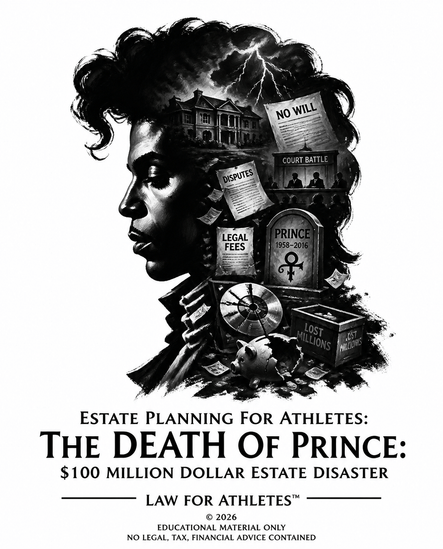
The sudden passing of Prince Rogers Nelson on April 21, 2016, sent shockwaves through the global music community. Beyond the grief of losing a generational talent, his death ignited one of the most complex, expensive, and public probate battles in American history. Prince was a pioneer who fiercely protected his creative autonomy during his life, yet he died intestate – without a legal will.
This omission turned his “Vault” of unreleased music and his vast Name, Image, and Likeness (NIL) rights into a legal battlefield. For creators, athletes, and artists, the Prince estate serves as the ultimate case study on what happens to intellectual property after death and why protecting your digital and creative legacy is just as vital as protecting your physical assets.
⚡ Key Takeaways
- Intestacy is Costly: Prince died without a will, leading to a 6-year legal battle and tens of millions in legal fees.
- Valuation Gap: The IRS valued the estate at nearly double the administrator’s original estimate ($156.4M vs $82.3M).
- NIL Rights Matter: Name, Image, and Likeness (NIL) rights for musicians and athletes often represent the bulk of an estate’s value and can be sold to third-party corporations.
- State Laws Vary: The survival of “Right of Publicity” (NIL) after death depends heavily on the state where the creator was domiciled.
- The Vault: Control over unreleased IP is often the most contested asset in a celebrity estate.
Contents
- The Six-Year Legal Limbo
- Valuation Warfare: The IRS vs. The Estate
- What Happens to Intellectual Property After Death?
- NIL Rights: The Commercial Life After Death
- The Split: Primary Wave and Prince Legacy LLC
- The Cautionary Tale for Modern Creators
- Frequently Asked Questions (FAQ)
- Call To Action & Next Steps
The Six-Year Legal Limbo
When Prince passed away at Paisley Park, he left no spouse, no children, and no parents. Under Minnesota law, his estate was to be divided among his siblings. However, the lack of a will meant that the court had to spend years vetting over 700 potential heirs – ranging from distant cousins to individuals claiming Prince was their secret father – before settling on his six siblings.
During this time, the estate was managed by professional administrators (initially Bremer Trust, then Comerica Bank & Trust). While these entities kept the lights on at Paisley Park, the family was largely sidelined from decision-making. This period was marked by high-tension litigation regarding who would control “The Vault” – a legendary climate-controlled room containing thousands of unreleased songs.
Valuation Warfare: The IRS vs. The Estate
One of the most significant hurdles in closing the estate was the massive discrepancy in valuation. In a probate case of this magnitude, the federal government takes a massive cut through estate taxes.
| Entity | Initial Valuation | Focus of Dispute |
|---|---|---|
| Comerica Bank (Estate) | $82.3 Million | Undervalued IP and unreleased catalog. |
| Internal Revenue Service (IRS) | $163.2 Million | High valuation of NIL rights and “The Vault.” |
| Final Settlement (2022) | $156.4 Million | Compromise after years of audit and litigation. |
The IRS argued that Prince’s brand – his very name and likeness – was worth far more than the estate claimed. This illustrates a critical point: your “brand” doesn’t die with you. It is a taxable asset that can be appraised just like a house or a stock portfolio.
What Happens to Intellectual Property After Death?
A common question among artists is: what happens to intellectual property after death? In the United States, IP is generally treated as personal property.
- Copyright Ownership: For works created after 1978, copyright protection lasts for the life of the author plus 70 years. When Prince died, his copyrights (the music, lyrics, and recordings) transferred to his estate.
- Control: Because there was no will, the court-appointed administrator had the power to sign licensing deals, such as the 2017 deal that brought Prince’s catalog back to major streaming services like Spotify and Apple Music.
- Termination Rights: Under the Copyright Act, heirs have the right to “terminate” previous grants of copyright after a certain period (usually 35 years), allowing them to claw back ownership from record labels. Without a clear plan, these complex legal maneuvers often become the subject of sibling infighting.
NIL Rights: The Commercial Life After Death
While copyright covers the music, NIL rights (Name, Image, and Likeness) cover the person. This is often referred to as the “Right of Publicity.”
How NIL Rights for Musicians, Athletes, and Artists Matter After Death
For a figure like Prince, NIL rights are arguably more valuable than his tangible assets. These rights control:
- The use of his image on merchandise (t-shirts, posters).
- The creation of “hologram” performances.
- The use of his name in documentaries or Broadway shows.
- Biographical films and commercial endorsements.
In many states, NIL rights expire the moment the person dies. However, after Prince’s death, Minnesota proposed passing the “PRINCE Act” (Personal Rights in Names Can Endure), which ensures that an individual’s right of publicity can be passed down to heirs and protected for at least 50 years after death. This prevents corporations from using a deceased artist’s face to sell products without the estate’s permission. It was a proposal and was not codified into the law.
The Split: Primary Wave and Prince Legacy LLC
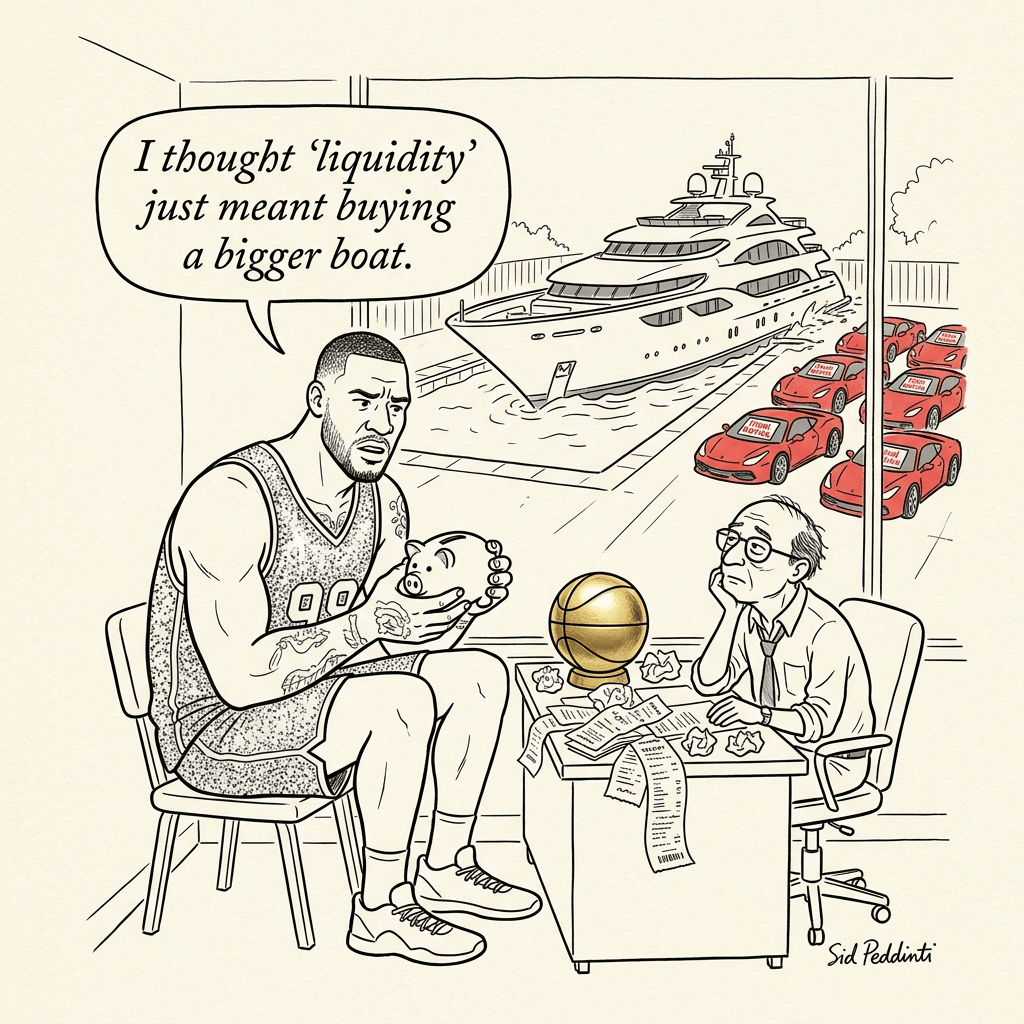
By the time the estate was finally ready for distribution in 2022, the “heirs” were no longer just the siblings. Tired of the long legal battle and in need of liquidity, three of the original heirs (Tyka Nelson, Omarr Baker, and Alfred Jackson) sold their interests to Primary Wave, a powerhouse music publishing company.
This created a “divided house” structure:
- Primary Wave: Owns approximately 50% of the estate and specializes in commercializing legendary catalogs.
- Prince Legacy LLC: Comprised of the remaining three siblings (Sharon, Norrine, and John Nelson) and their advisors, who seek to maintain the “purity” of Prince’s original vision.
These two entities must now collaborate on every decision involving Prince’s name and music—a partnership born of legal necessity rather than creative alignment.
The Cautionary Tale for Modern Creators
The Prince estate is a loud warning for any creator who believes their work is their own. Without a will or a trust, you are essentially surrendering your life’s work to a state-mandated formula.
- Brand Erosion: When IP is managed by banks or bickering heirs, the artistic intent is often lost in favor of quick cash.
- Legal Fees: Reports suggest tens of millions of dollars were spent on lawyers and administrators—money that should have gone to the family or to charitable causes Prince supported.
- Loss of Privacy: Probate is a public process. Prince was a private individual, yet his most intimate financial details and family squabbles became public record because there was no private trust in place.
For the modern athlete or musician, NIL rights are the new frontier. Whether it’s a social media influencer’s digital avatar or a basketball player’s signature shoe line, these rights must be explicitly addressed in an estate plan to ensure they aren’t “destroyed” or exploited by third parties after death.
Frequently Asked Questions (FAQ)
What happens to intellectual property after death if there is no will?
If someone dies without a will (intestate), their intellectual property is distributed according to state law, usually to the closest living relatives. A court-appointed administrator manages the assets until the case is closed.
How do NIL rights for musicians, athletes, and artists matter after death?
NIL rights allow an estate to control and profit from the deceased person’s brand. This includes licensing for movies, video games, and merchandise. Without these rights, the artist’s image could be used by anyone without compensation to the family.
Why did it take six years to settle Prince’s estate?
The delay was caused by three main factors: identifying the legal heirs among hundreds of claimants, a massive valuation dispute with the IRS, and the complexity of dividing unreleased intellectual property.
Who owns Prince’s music now?
Ownership is currently split between Primary Wave (which bought the stakes of three heirs) and Prince Legacy LLC (representing the remaining three siblings).
Call To Action & Next Steps
Understanding the intersection of law, creativity, and legacy is essential for every modern professional. Don’t let your “Vault” become a legal battleground.
Secure Your Legacy Today:
To learn more about protecting your intellectual property and Name, Image, and Likeness (NIL) rights, visit our resource center.
Article Contributed By:
Sid Peddinti, Esq. – Lawyer, Researcher, Publisher, AI Innovator
Keywords / Topics: Estate Planning for Artists, Prince Estate Case Study, Intellectual Property After Death, NIL Rights, Music Law, Right of Publicity.



Leave a Reply