
ARTICLE SUMMARY
- The Hernandez Precedent: Despite a $40 million NFL contract, Aaron Hernandez died insolvent in 2017 due to a lack of structured estate planning, leaving his family embroiled in a multi-year legal battle over a single primary asset: his home.
- Modern NIL Risk: Student-athletes with high NIL valuations are now facing “pro-level” financial risks. Without Irrevocable Trusts and LLC structures, personal wealth is vulnerable to civil litigation, wrongful death claims, and probate disputes.
- Strategic Fix: Athletes must move from “cash-flow” thinking to “asset-shielding.” Key tools include Homestead Exemptions, Private Placement Life Insurance (PPLI), and Spendthrift Provisions to protect heirs from creditors.
- Core Metric: 60% of former pro athletes face financial distress within five years of retirement; NIL earners are now entering this risk window 3–4 years earlier.
Table of Contents
- The Cold Reality of a Failed Legacy
- Anatomy of a Collapse: The Three-Way War for the Hernandez Estate
- The NIL Shift: You Are a CEO at 18, Not Just a Player
- The Civil Litigation Trap: Protecting Your Brand from the “Wrongful Death” Predator
- The Homestead Myth: Why Your House Isn’t Always a Fortress
- The Tactical Blueprint: Structuring Trusts and Entities for Maximum Shielding
- The Insurance Gap: Moving Beyond Standard Coverage
- University Leadership: The Fiduciary Duty to Educate
- Conclusion: The Audit You Can’t Afford to Skip
The Cold Reality of a Failed Legacy
In April 2017, when Aaron Hernandez took his own life in a Massachusetts prison cell, the world saw the tragic end of a fallen star. But for the legal and financial teams left behind, it was the start of a chaotic, multi-front war that serves as the most harrowing cautionary tale in sports history.
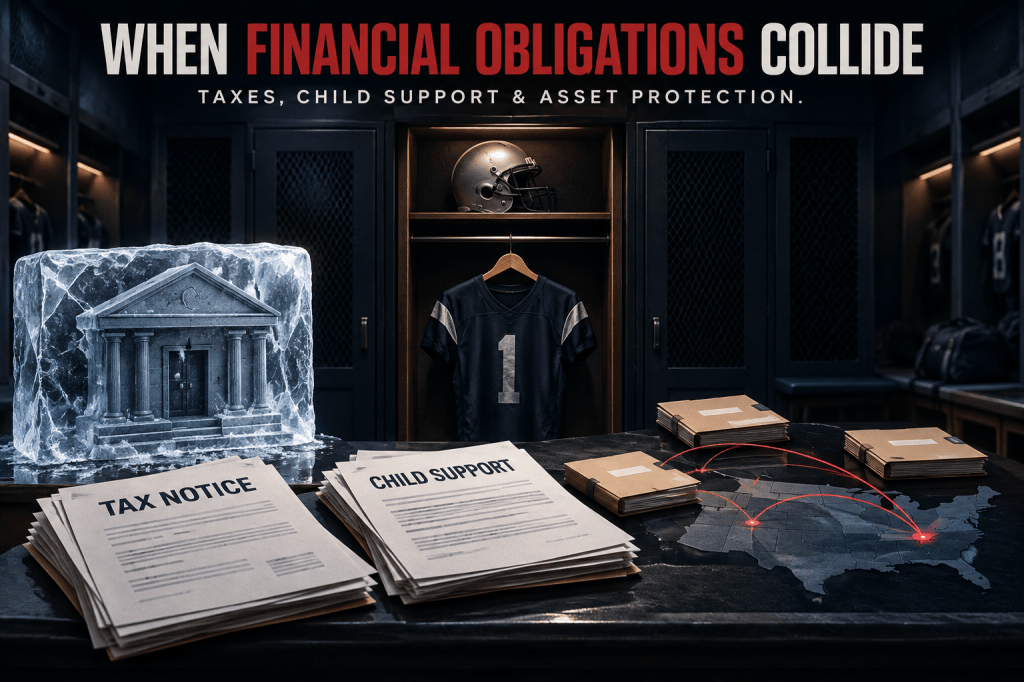
Hernandez had signed a $40 million contract extension with the New England Patriots just years prior. To the average observer, his family should have been set for generations. Instead, his estate was effectively insolvent. The money was gone—vaporized by legal fees, poor management, and a total lack of asset protection. What remained was a single house and a mountain of competing claims from murder victims’ families, lawyers, and the IRS.
As a high-profile student-athlete in the Name, Image, and Likeness (NIL) era, you might think this doesn’t apply to you.
You aren’t a convicted felon.
You aren’t facing a double-murder charge.
But financial ruin doesn’t require a criminal record; it only requires negligence.
If you are a Top-100 recruit or a starting quarterback at a Power 4 school, your valuation is likely in the seven-figure range. You are accumulating wealth at a speed that exceeds your legal infrastructure. If you died tomorrow, or if you were involved in a catastrophic car accident that resulted in a civil lawsuit, your family wouldn’t just lose you—they would lose everything you worked for. The Hernandez case isn’t just about crime; it’s about the total failure of financial defense.
Anatomy of a Collapse: The Three-Way War for the Hernandez Estate
The Hernandez estate was a battlefield of three distinct interests, each clawing for a piece of a shrinking pie:
- The Wrongful Death Claim: The family of Odin Lloyd, for whose murder Hernandez was convicted, filed a civil suit. In the U.S. legal system, the burden of proof in civil court is lower than in criminal court. They sought the entirety of his remaining assets to satisfy a judgment.
- The Daughter’s Homestead Claim: Shayanna Jenkins-Hernandez, the mother of Aaron’s daughter, Avielle, fought to keep the proceeds from the sale of their North Attleboro home. She invoked “Homestead” protections, arguing that the money should be shielded for the support of a minor child.
- The Legal Fee Feed: Lawyers for Hernandez’s various trials had outstanding bills totaling hundreds of thousands of dollars. They sat at the table as creditors, demanding payment before any family member saw a dime.
Because Hernandez had no robust estate plan leveraging entities such as Irrevocable Trusts or Family Limited Partnerships, every dollar he owned was “exposed.” It sat in his personal name or in easily reachable accounts. When the lawsuits hit, there was no wall between his wealth and his liabilities.
For a modern NIL athlete, this is the equivalent of playing without a helmet.
You are exposed to every blindside hit the legal system can deliver.
The NIL Shift: You Are a CEO at 18, Not Just a Player
The “old world” of college athletics allowed you to be a kid. You lived on a scholarship, stayed in a dorm, and waited for the “league” to start your professional life. That world is dead.
Today, you are a business entity the moment you sign your first NIL deal. If you are earning $500,000 a year from a collective and another $200,000 from local endorsements, you are a mid-sized corporation. However, most athletes are still operating like individuals. They receive checks in their personal name, deposit them into personal checking accounts, and buy assets (cars, jewelry, real estate) in their personal names.
This is a catastrophic mistake.
When you operate as an individual, you possess “unlimited liability.” If your brand is involved in a dispute, or if you are involved in a personal injury claim, every cent of your NIL money is fair game. The Aaron Hernandez estate proves that even a $40 million “potential” can turn into $0 if the assets aren’t moved behind legal veils before the trouble starts.
The Civil Litigation Trap: Protecting Your Brand from the “Wrongful Death” Predator
One of the most complex parts of the Hernandez saga was the “abatement ab initio” doctrine. Initially, because Hernandez died while his case was under appeal, his conviction was technically vacated. This gave his estate a temporary window of “innocence” that his lawyers tried to use to claim his NFL pension and withheld bonuses.
While that legal loophole has since been tightened, the lesson remains: Civil court is the real threat to your wealth.
Imagine you are driving home from a late-night practice. You get into an accident. In today’s world, “Trial Attorneys” look at high-profile athletes as “Deep Pockets.” If they see you have a $2M NIL deal, they aren’t suing for the $50,000 insurance limit; they are coming for your entire valuation.
If your NIL money is housed in a Spendthrift Trust, that money is generally unreachable by creditors or civil judgments. A Spendthrift Trust allows a trustee to control the funds, ensuring they are used for your benefit (or your family’s) while staying out of the hands of someone suing you. Aaron Hernandez didn’t have this. His daughter’s future depended on a house that was already being circled by vultures.
The Homestead Myth: Why Your House Isn’t Always a Fortress
In the Hernandez case, the $1.3 million sale of his home was the only real money left. His fiancé fought to protect that money under homestead laws, which are designed to prevent a family from being kicked out of their primary residence.
However, homestead laws vary wildly by state. In Florida or Texas, the protections are robust. In Massachusetts, they are more complex and limited.
The Strategy for You:
As you begin to buy property with your NIL earnings—whether it’s a condo for yourself or a home for your parents—you must understand “Titling.” If the property is in your name, it is a target. If the property is owned by a Land Trust or an LLC owned by a Trust, you create layers of anonymity and protection.
Aaron Hernandez’s daughter shouldn’t have had to fight in court for the proceeds of a house sale. That money should have been tucked away in a life insurance trust or an educational fund years before the legal walls closed in.
The Tactical Blueprint: Structuring Trusts and Entities for Maximum Shielding
To avoid the Hernandez fate, you must implement a “Professional Infrastructure.” This isn’t just for “when you make it.” This is for now.
1. The Multi-Member LLC (Operating Entity)
Never sign an NIL contract in your own name. Establish an LLC (e.g., “AJ20 Media LLC”). The contract is between the brand and the LLC. This creates the first layer of corporate shielding. If the brand sues for a breach of contract, they sue the company, not you personally.
2. The Revocable Living Trust (The Bridge)
This ensures that if something happens to you, your assets avoid Probate. Probate is the public, expensive, and slow court process of distributing your stuff. Hernandez’s estate went through probate, which is why every detail of his financial failure was in the newspapers. A Trust keeps your business private.
3. The Irrevocable Trust (The Vault)
For high-earners, an Irrevocable Trust is the “break glass in case of emergency” tool. Once assets move here, you don’t “own” them—the Trust does. Because you don’t own them, creditors (like the families in the Hernandez civil suit) cannot seize them. This is how you protect your mother’s house or your child’s future.
4. The Family Limited Partnership (FLP)
This allows you to bring your family into the business structure while you maintain control. It’s a powerful tool for shifting income and protecting assets from future “hangers-on” or legal threats.
The Insurance Gap: Moving Beyond Standard Coverage
Aaron Hernandez’s estate was drained by legal fees. One of the most overlooked tools for athletes is Legal Expense Insurance and High-Limit Umbrella Liability.
When you become a public figure, your risk profile changes. A standard auto policy is a joke. You need a $5 million to $10 million Umbrella Policy that covers you for everything from social media defamation to personal injury.
Furthermore, consider Private Placement Life Insurance (PPLI). This is a strategy used by the ultra-wealthy to grow investments tax-free while providing a massive, protected death benefit. If Hernandez had a PPLI policy structured correctly, the death benefit would have gone directly to his daughter, tax-free and shielded from the creditors of his estate. It would have been the one thing the lawyers couldn’t touch.
University Leadership: The Fiduciary Duty to Educate
This section is for the Athletic Directors, Coaches, and General Managers. You have a moral and fiduciary responsibility to ensure your athletes aren’t just “compliant” with NCAA rules, but “protected” from life.
The Hernandez case happened after he left Florida, but the seeds of his financial illiteracy were sown during his college years. Universities must move beyond “Financial Literacy 101” (which usually just covers how to use a debit card) and move into Asset Protection and Estate Engineering.
If your star player is making $1M, and your “NIL Department” hasn’t introduced them to a trust attorney, you are failing them. You are setting them up to be the next headline about a “Broke Athlete.”
The Advisory Hub Recommendation:
Universities should partner with third-party advisors to provide “Estate Audits” for any student-athlete earning over a certain threshold. This isn’t about telling them how to spend their money; it’s about showing them how to build a wall around it.
The “Inner Circle” and Fiduciary Responsibility: Who Holds the Keys?
One of the quietest tragedies in the Aaron Hernandez story was the people surrounding him. When the money is flowing, everyone is a “manager” or an “advisor.” When the prison doors shut and the bank accounts dried up, that circle evaporated.
In the NIL era, you will be approached by cousins, high school friends, and “uncles” who want to manage your brand. The Hernandez Rule: If they aren’t a bonded fiduciary with professional liability insurance, they don’t touch the money.
A fiduciary is legally required to act in your best interest. Your “homeboy” is not. Hernandez’s lack of a professional, disinterested fiduciary meant there was no one to say “No” to the lifestyle creep and the mounting legal liabilities until it was too late.
Modern NIL Deal Structure Example:
Instead of a $100,000 cash payment for an endorsement:
- $50,000 to your Operating LLC for immediate taxes and expenses.
- $30,000 directly into a Diversified Investment Account owned by your Trust.
- $20,000 into a “Risk Reserve” for legal and insurance premiums.
This structure ensures that even if you are sued, or even if you make a mistake, 30% of every deal you ever signed is locked in a vault that the “Odin Lloyds” of the world cannot crack.
Conclusion: The Audit You Can’t Afford to Skip
Aaron Hernandez died with the world thinking he was a multi-millionaire, yet his daughter was left to fight for the scraps of a mortgaged home. He had the talent, he had the contract, but he had zero financial defense.
As an NIL athlete, your “playing days” are your “earning days.” But those earning days can be wiped out by one bad decision, one lawsuit, or one tragic accident. Don’t let your legacy be a court docket.
Your Action Plan:
- Audit Your Title: Look at every major asset you own (car, house, jewelry). If your name is on the title, you are at risk.
- Fire the “Yes Men”: If your inner circle isn’t talking about trusts and tax liability, you have the wrong circle.
- Build the Vault: Contact an NIL-specialized estate attorney to draft a Revocable Living Trust and an Operating LLC.
- Insure the Unthinkable: Get an Umbrella policy today. It’s the cheapest million dollars of protection you’ll ever buy.
The Aaron Hernandez story is a dark chapter in sports history, but it can be the light that saves your financial future. Wealth is not what you make; it’s what you shield. Build your wall before you need it.
Is Your NIL Wealth Shielded?
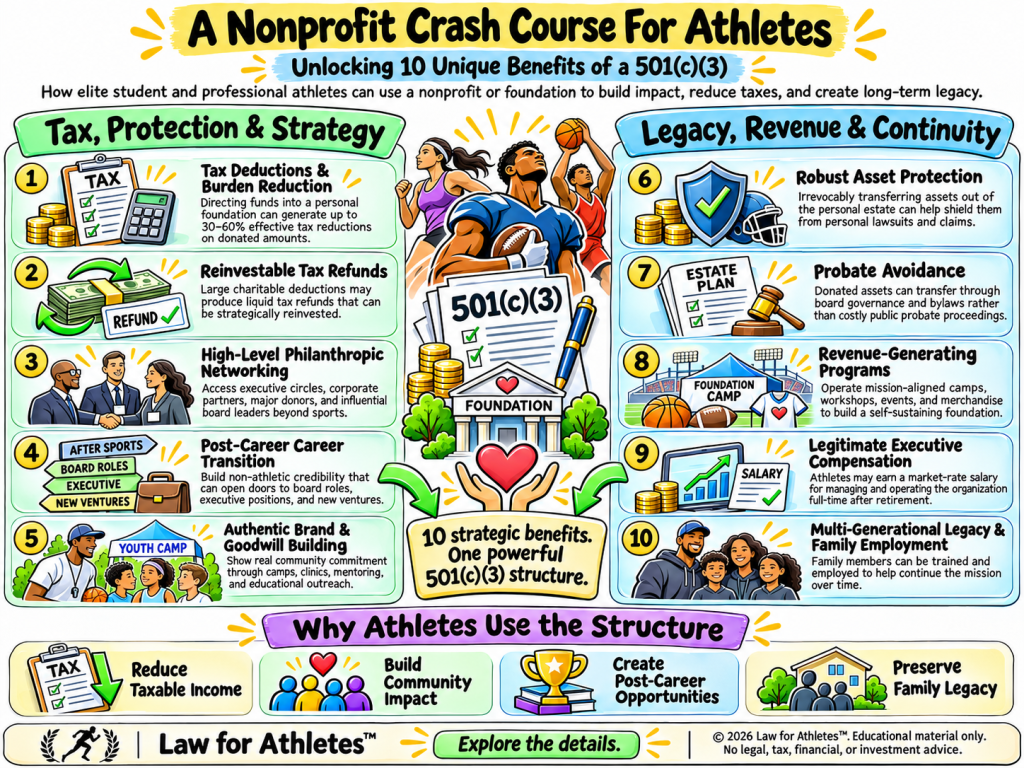
Don’t wait for a legal crisis to find out your assets are exposed. Law For Athletes™ provides elite-level business, estate, nonprofit, IP, NIL, and tax crash courses and training workshops to avoid these types of disasters – from the legal and tax side, anyway. Learn how the law works, protect your assets using the right structures, and ensure you stay out of trouble.
Protect the Brand. Secure the Future. Build the Legacy.
References & Citations
- State of Massachusetts v. Aaron Hernandez, 473 Mass. 699 (2016).
- “The Estate of Aaron Hernandez: A Lesson in Insolvency,” Sports Business Journal, 2017.
- “Abatement Ab Initio: The Legal Loophole That Shook the NFL,” Harvard Law Review, 2018.
- NCAA NIL Policy Guidelines (Updated 2024), NCAA.org.
- “Asset Protection for Professional Athletes,” Journal of Financial Planning, Vol. 34, No. 2.
- The Dynasty: New England Patriots, Jeff Benedict (2020).
- “Homestead Exemptions and the Athlete Estate,” American Bar Association – Property & Trust Section.



Leave a Reply